Embark on a transformative journey of self-discovery and professional development as you gain the practical tools and theoretical knowledge needed to confidently lead therapeutic art sessions.
Upcoming Cohorts
(Fri–Sun)
October 23-25, 2026 | 6:00 AM–1:30 PM Eastern Time
November 13-15, 2026 | 9:00 AM–4:30 PM Pacific Time (2 spots left)
Jan 22-24, 2027 | 9:00 AM–4:30 PM Eastern Time
PAYMENT PLANS AVAILABLE AT CHECKOUT
FUNDAMENTALS OF THERAPEUTIC ART MAKING
An Artful Path to Holistic Wellness

Why This Training Exists
For years, while working as an art therapist, helping professionals would come to my office asking to borrow art supplies for their groups.
When I asked what they planned to do, the answer was almost always the same:
"We're just going to print some coloring pages."
It wasn't because they lacked creativity.
It was because they lacked confidence.
Again and again, I heard:
"I'm afraid of crossing into art therapy."
That fear revealed a much bigger problem.
Somewhere along the way, we've forgotten that creativity belongs to all of us.
Long before art therapy and professional licenses existed, humans were making art to express emotions, mark life's transitions, strengthen community, and make meaning of their experiences. Creative expression is one of our oldest forms of communication. It is our birthright.
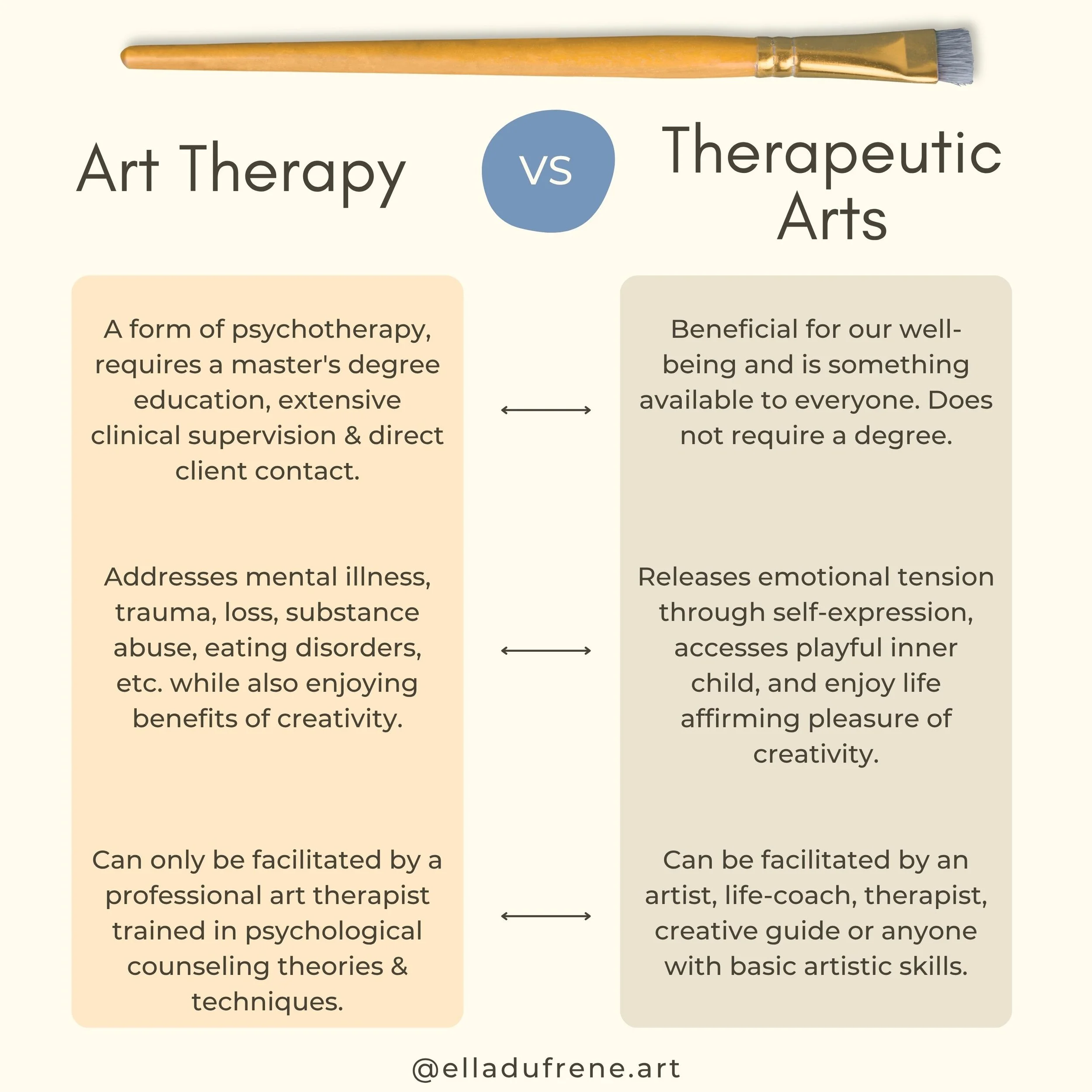
Art therapy is a specialized form of psychotherapy, and respecting that distinction is essential. But there is also a powerful place for therapeutic art making—intentional creative experiences that promote reflection, connection, resilience, and well-being without practicing psychotherapy.
That's why I created this training.
To help counselors, coaches, educators, healthcare professionals, yoga teachers, and other helping professionals feel confident using creative expression ethically, intentionally, and effectively.
Because there is so much more available than coloring pages.
And when people are given the opportunity to create with purpose, something remarkable happens: they begin to reconnect with themselves, each other, and what matters most.
Whether you’re an artist, mental health specialist, caregiver, coach, social worker, educator, or community leader, you have the potential to elevate both your practice and the welfare of your clients through the tool of creative expression. During the Fundamentals of Therapeutic Arts training, I will guide you in harnessing and channeling this innate artistic wisdom using an empirically-backed, immersive approach.
From Uncertain to Confident Creative Facilitator
Before
Afraid of crossing boundaries into art therapy
Using coloring pages and crafts
Searching for ideas.
Unsure what materials to use and why
Hoping participants engage.
After
Confident in your ethical scope.
Purposeful, research-informed creative experiences.
Following a proven framework.
Trusting your creativity and feeling comfortable with materials.
Intentionally designing meaningful experiences.

Why choose this training?
-
Ella Dufrene is a Registered Art Therapist, educator, and retreat leader. For more than a decade, she has helped individuals, groups, and helping professionals harness the transformative power of creativity for self-discovery, personal growth, and meaningful connection.
She holds a Master's Degree in Art Therapy and Creativity Development from Pratt Institute and has spent the past ten years facilitating therapeutic art-making experiences in clinical settings, retreat environments, community programs, and private practice.
Ella is passionate about helping therapists, educators, coaches, wellness practitioners, artists, and curious creatives develop a deeper understanding of how art-making can support reflection, self-expression, and well-being. Her teaching style is experiential, engaging, and grounded in both research and lived practice. Participants don't just learn about therapeutic art-making—they experience it firsthand.
Drawing from art therapy, mindfulness, somatic awareness, nature-based practices, and expressive arts approaches, Ella creates learning environments that are both professionally enriching and personally transformative.
Whether you're looking to expand your professional toolbox, deepen your relationship with creativity, or learn how to facilitate meaningful art-making experiences for others, Ella's goal is to help you leave feeling inspired, confident, and equipped with practical tools you can immediately apply in your life and work.
-
Our curriculum will equip you with proven tools needed to make a lasting impact and guide you through applying the transformative power of art.
Our methodology, although systematic and research-based, acknowledges individual learning styles and tailors our course accordingly. We focus heavily on practical application and experiential learning, ensuring not just knowledge acquisition, but its application too.
Enhancing Therapeutic Skills: Learn practical skills to incorporate therapeutic art into your practice through hands-on experiential learning.
Driving Career Development: Equip yourself with the necessary tools to professionally integrate art into your practice.
Fostering Personal Growth and Self-Care: Discover how art can serve as self-care to alleviate stress, enhance self-awareness, foster creative coping mechanisms, and uplift mood.
Creating Community Impact: Learn to run therapeutic art classes or programs, enabling communal growth through art.
Promoting Creative Expansion: Overcome artistic blocks and expand your creative capabilities while understanding the therapeutic benefits.
BONUS: Receive 50+ meaningful art making directives with complete instructions on how to apply them to your individual practice.
Madison’s Testimonial
3-day online training
3-day online training (Fri-Sun, 9-4:30pm each day), conducted through zoom.
Upcoming Cohorts:
October 23-25, 2026 | 6:00 AM–1:30 PM Eastern Time
November 13-15, 2026 | 9:00 AM–4:30 PM Pacific Time (2 spots left)
Jan 22-24, 2027 | 9:00 AM–4:30 PM Eastern Time
Pre-requisite
This training requires no prior formal art training or education. A background in therapy and counseling techniques is helpful, but not necessary.
Payment Plans Available

Our Curriculum
-
Intro and Overview:
Experiential Self-Reflection Collage
Sharing, responses, discussion
Creative Mental Health Practices and Theories 101
What is Art Therapy?
What is Therapeutic Arts?
Who Benefits from Art Therapy & Therapeutic Arts Settings?
Sharing, responses, discussion
The Sensory Use of Clay:
Clay as a Tool for Meditation
Transformative Powers of Clay
Meditation, Mantra & Clay Experiential Activity
Sharing, responses, discussion
Understanding the Meaning of Mandalas:
Jungian Archetypal Symbols & Themes
Experiential activity
Neurobiology of Creative Expression
Neuroplasticity
Neurogenesis
Neurotransmitters and creativity
Self expression and memory
Dopamine and creativity
Serotonin and creativity
-
Rorschach’s Method :
Psychological Assessment Test - Theory & Technique
Experiential activity
Sharing, responses, discussion
Eco-Therapeutic Arts:
Nature as Setting
Nature as Subject
Nature as Material
Existential
Experiential activity
Sharing, responses, discussion
The Power of Materials in Influencing Expression and Facilitating Therapeutic Outcomes
Drawing (pastels, colored pencils, markers)
Painting (watercolors & acrylics)
Sculpting (clay & found objects)
Collaging
Mindfulness-Based Therapeutic Arts Approaches & Theories:
Self-Compassion
Becoming the inner witness
Meditation
Visualization
Experiential activity
Sharing, responses, discussion
Integrating Movement & Music in Therapeutic Arts:
Authentic Movement Theory & Technique
Intuitive Painting Theory & Technique
Experiential activity
-
Somatic Application in Therapeutic Arts:
Theory & practice
Body Scan Experiential
Effective Group Session Structuring and Facilitation
Initial consult- Identifying & assessing client needs
Setting up
Illustrative Case Examples
Building Rapport
Materials
Group Structure
Educating
Themes
How to work with specific audience to meet certain goals
Dealing with resistance
Music
Practical Application
Planning & sharing in break out rooms
Putting The Work Into Practice:
Cultivate your unique creative voice and boost your confidence through hands-on practice. Each training participant will have an opportunity to co-facilitate a directive and receive feedback from peers.
Frequently Asked Questions
-
Not at all. This training is about facilitating the creative process, not creating "good" art. No artistic experience is required, only curiosity and a willingness to explore.
-
No. This training focuses on therapeutic art making, which is different from Art Therapy.
Art Therapy is a mental health profession practiced by licensed or credentialed art therapists. Therapeutic art making uses creative experiences to support reflection, self-expression, and connection in educational, wellness, coaching, community, and other non-clinical settings.
Throughout the training, we discuss ethical considerations and scope of practice so you'll understand how to use these approaches responsibly within your own profession.
-
Fundamentals is ideal for therapists, counselors, educators, coaches, artists, wellness practitioners, social workers, community leaders, and anyone interested in integrating therapeutic art making into their personal or professional life.
-
You'll leave with:
A practical framework for facilitating therapeutic art experiences
Hands-on experience leading creative directives
Greater confidence as a facilitator
A digital workbook and resources
Practical tools you can immediately apply in your work
A Certificate of Completion
-
Yes. This is a live, interactive training held on Zoom.
Because experiential learning and group discussion are central to the experience, participants are expected to attend live.
-
Yes. You will receive access to all training recordings and training materials.
-
Collage Materials
Magazines (thrift stores, libraries, waiting rooms, and community centers are often great sources)
Scissors
Glue stick or Mod Podge
Drawing Materials
Assorted markers
Colored pencils
Drawing pencils
Black pen
Notebook or journal
Sharpener
Eraser
Pastels (chalk or oil)
Painting Materials
Acrylic paints
Watercolors (optional)
Paintbrushes in various sizes
Paint palette (a paper plate works perfectly)
Plastic cup or mason jar for water
Towels or rags
Paper & Surfaces
Bristol paper or surface for collage (14" x 17")
Watercolor paper (a least 10x10)
One canvas (at least 10x10")
Sculpture Materials
Self-hardening clay, ceramic clay (ideal), or paper clay. Make sure it is soft enough to manipulate.
Additional Recommended Materials
Water-soluble pastels
-
Yes. Participants who complete the training will receive a Certificate of Completion.
Please note that this certificate does not certify participants as Art Therapists or licensed mental health professionals.